Finding Vatican hidden gems in a place that sees millions of visitors a year might feel like trying to find a needle in a haystack made of gold and marble, but I can tell you from experience that they are absolutely there if you know where to look. When I first stepped into Vatican City, Italy, I was overwhelmed by the sheer scale of the crowds pushing toward the Sistine Chapel, but as I started peeling back the layers of this ancient city-state, I realized that the real magic often happens in the quiet corners that most people walk right past. This guide is born out of years of exploring the Vatican off the beaten path, moving beyond the standard tourist brochures to find the soul of the Holy See. Whether you are looking for Vatican secret spots tucked away in the museums or trying to understand the truth behind the secret rooms Vatican legends often whisper about, I want to help you navigate this labyrinth like an insider. In 2026, the crowds haven’t slowed down, but the opportunities for a unique experience are better than ever if you have the right Vatican insider guide to lead the way. We aren’t just talking about the major monuments; we are diving into Vatican undiscovered spots, seeking out Vatican hidden art, and learning the Vatican exploration tips that will turn a stressful day of sightseeing into a profound journey through history.
Are There Really Secret Rooms in Vatican City
When people ask me about my time in Vatican City, the most common question I get is always about the secret rooms Vatican rumors. There is something about the combination of ancient walls, religious mystery, and sovereign status that makes the imagination run wild. During my first few visits, I spent hours talking to local guides and even a few residents of Rome to separate the Dan Brown-style fiction from the actual architectural reality of the Vatican. The truth is, the Vatican is a massive complex of interconnected palaces, and naturally, there are hundreds of rooms that are not part of the standard museum tour. These aren’t necessarily “secret” in the sense of being magical or conspiratorial, but they are certainly Vatican secret areas that the general public never gets to breathe in.
What People Mean by Secret Rooms in the Vatican
To understand the Vatican secret history, you first have to understand what we mean by “secret.” For most travelers, the phrase secret rooms Vatican refers to the private papal apartments, the restricted storage areas of the museums, or the legendary underground bunkers. In my experience, what people are actually looking for are those Vatican hidden locations that feel untouched by the modern world. When you are standing in the middle of a crowded hall, the idea of a quiet, locked room behind a velvet rope becomes the ultimate Vatican hidden treasures hunt. Most of these rooms are simply functional—offices for the Roman Curia or restoration labs where Vatican hidden art is meticulously preserved—but their restricted nature gives them an irresistible allure.
Can Tourists Access Hidden Areas in Vatican City
The big question is: can you access hidden rooms Vatican? The answer is a bit of a “yes and no,” and it depends entirely on your preparation. While you can’t just wander into the Pope’s private study, there are Vatican special access tours that open doors usually kept firmly shut. I remember the first time I managed to get onto a “Scavi” tour; it felt like I had been handed a golden ticket to a different world. This is how you find the real Vatican secret spots. Many Vatican hidden attractions are accessible if you book months in advance or hire a guide who has specific credentials to take you into restricted zones. If you are just walking in with a standard ticket, your access to Vatican secret areas will be limited, but even then, there are ways to find Vatican lesser known places within the public route.
Myth vs Reality of Vatican Secret Rooms
Is the Vatican secret rooms myth or real? It’s a bit of both. The myths often involve hidden gold or ancient scrolls that change history, which makes for a great movie but isn’t quite the reality I found while exploring Vatican City. The reality is arguably more fascinating. The “secret” rooms are often masterpieces of architecture, like the Niccoline Chapel or the Bramante Staircase (the original one, not the modern spiral). These are Vatican hidden treasures because they are preserved in a state of near-perfection specifically because they aren’t trampled by 20,000 people a day. When we talk about Vatican secret myths, we are often covering up the fact that the real “secret” is just how much history is packed into every square inch of this tiny country in Italy.
Hidden Gems Inside the Vatican Museums Most Visitors Miss
The Vatican Museums are often described as a marathon, and honestly, after my tenth time walking those halls in Italy, I tend to agree. Most people enter with a singular goal: get to the Sistine Chapel as fast as possible. But in that frantic race, they miss the hidden gems Vatican Museums hold in the quiet corridors. I’ve found that if you simply slow down and look for the doors that look less “important,” you stumble upon the most incredible Vatican hidden treasures. It is about shifting your focus from the famous statues everyone is photographing to the Vatican undiscovered spots where the air feels a little cooler and the history feels a little more intimate.
Lesser Known Galleries in Vatican Museums Worth Visiting
One of my favorite Vatican exploration tips is to spend time in the Gregorian Etruscan Museum or the Carriage Pavilion. These are classic lesser known galleries Vatican Museums house that provide a much-needed break from the Renaissance overload. While everyone is fighting for a view of the Laocoön, I often find myself alone in the Hall of the Animals or the Gallery of the Candelabra, looking at Vatican hidden art that is just as technically impressive but lacks the “celebrity” status of other works. The Pinacoteca, or the Painting Gallery, is another one of those Vatican secret spots that people often skip because they are tired, yet it contains masterpieces by Raphael and Caravaggio that would be the centerpiece of any other museum in Europe.
Quiet Rooms Away from Tourist Crowds
If you are looking for quiet rooms Vatican Museums offer to escape the sensory overload, you have to be strategic. I’ve discovered that the further you get from the main “flow” toward the chapel, the more peaceful it becomes. The Museo Pio-Clementino has specific corners, particularly near the Octagonal Courtyard, where you can find a stone bench and just breathe. These are the Vatican quiet areas where you can actually hear your own footsteps. Finding these Vatican hidden locations isn’t just about avoiding people; it’s about giving yourself the mental space to actually process the beauty around you. In 2026, with tourism at an all-time high in Vatican City, these pockets of silence are the ultimate luxury.
Underrated Artworks Hidden in Plain Sight
There are so many underrated artworks hidden in plain sight that it’s almost overwhelming. I remember stopping once to look at the intricate floor mosaics in the Gallery of the Maps. While everyone was looking up at the gold ceilings, I was looking down at 16th-century depictions of sea monsters and Neptune. This is what it means to find Vatican hidden gems. You might also notice the small, detailed frescoes in the Borgia Apartments that detail myths and legends most visitors never bother to read about. These Vatican hidden details tell the “real” stories of the Popes—their ambitions, their fears, and their personal tastes. When you start noticing these, you aren’t just a tourist anymore; you’re exploring the Vatican off the beaten path.
Secret Corners of St Peter’s Basilica You Should Not Miss
Even after visiting Italy dozens of times, the first glimpse of St. Peter’s Basilica always takes my breath away. It is the literal and figurative heart of Vatican City, but because of its sheer scale, it is surprisingly easy to overlook the secret corners basilica Vatican hides in its shadows. Most visitors walk straight down the nave toward Bernini’s Baldacchino, eyes fixed on the massive bronze canopy, completely bypassing the Vatican hidden treasures tucked away in the side aisles. I’ve learned that the best way to experience this space is to treat it like a treasure map. There are Vatican secret spots here that offer a profound sense of peace, away from the neck-craning crowds and the flash of cameras.
Hidden Chapels Inside St. Peter’s Basilica
If you want to find the hidden chapels St Peter’s Basilica protects, you have to look for the smaller iron gates that often lead to places of active prayer. While the Chapel of the Pietà is always surrounded by a wall of people, I often find myself wandering toward the Chapel of the Blessed Sacrament. It is one of those Vatican quiet areas where silence is strictly enforced, and the intricate gilded decorations are some of the finest in the world. These are the Vatican hidden locations where the religious significance of the site truly hits you. Another gem is the Clementine Chapel in the Vatican Grottoes below, which is one of the most sacred Vatican secret areas, sitting remarkably close to the tomb of St. Peter himself.
Lesser Known Statues and Details Most Visitors Ignore
The basilica is a forest of marble, and in that forest, there are countless lesser known statues and details most visitors ignore. Everyone knows the statue of St. Peter with the worn-down foot, but have you ever looked closely at the base of the pillars holding up the dome? There are hidden carvings—including a series of faces on the coats of arms that represent a woman in various stages of childbirth, a detail that is part of the deep Vatican secret history. These Vatican hidden details are the result of artists like Bernini leaving personal or symbolic marks that aren’t mentioned in standard guides. Finding these Vatican hidden gems makes you feel like you are decoding a centuries-old puzzle left behind by the masters.
Quiet Spots for Reflection Inside Basilica
Finding quiet places St Peter’s Square or the Basilica provide is a challenge, but it’s essential for a unique experience. One of my favorite Vatican exploration tips is to head to the left aisle, near the monuments to the Stuart kings. It tends to be much quieter there than near the main altar. These Vatican quiet areas allow you to appreciate the acoustics of the building—the way a whisper can travel across the vast space. It’s in these moments, sitting on a wooden pew away from the main thoroughfare, that you can truly appreciate the Vatican off the beaten path. These spots aren’t “hidden” by walls, but they are hidden by the collective movement of the crowd, making them perfect Vatican secret spots for a moment of reflection.
Hidden Passages and Restricted Areas (What You Can and Cannot See)
One of the most thrilling parts of exploring Vatican City is the realization that there is an entire world operating behind the scenes, often through a network of corridors that look like they were pulled straight from a history book. My fascination with the Vatican secret areas reached a peak when I first learned about the Passetto di Borgo—the elevated passage that connects the Vatican to Castel Sant’Angelo. It is the ultimate symbol of the Vatican off the beaten path, designed as an escape route for Popes in times of danger. While much of this network remains restricted, understanding the layout of these hidden passages Vatican access points helps you appreciate the strategic brilliance of this tiny sovereign state in Italy.
Secret Vatican Corridors and Who Can Access Them
The secret Vatican corridors and who can access them is a topic shrouded in protocol. Most of these passages, like the famous Corridors of the Apostolic Palace, are reserved for the Swiss Guard, the Curia, and the Pope himself. However, some of these Vatican secret spots are occasionally opened for scholarly research or very specific diplomatic functions. In my travels, I’ve found that even if you can’t walk through them, standing near the entrance to the Bramante Staircase (the original 1505 version) gives you a sense of that Vatican secret guide life. These corridors are the veins of the city, moving people and information away from the prying eyes of the public, maintaining the Vatican secret history that continues to evolve in 2026.
Areas Closed to Public Inside Vatican Museums
It’s important to manage expectations regarding restricted areas Vatican museums have on their map. There are dozens of rooms, such as the Room of the Images or certain sections of the Apostolic Library, that are strictly Vatican secret areas. These are areas closed to public inside Vatican Museums for conservation reasons or because they house sensitive administrative functions. I’ve often looked at the closed wooden doors in the Gallery of the Maps and wondered about the Vatican hidden art stored behind them. Knowing these areas exist adds a layer of mystery to your visit; it reminds you that what you see on a standard ticket is only about 20% of the actual complex. This is why searching for Vatican undiscovered spots is so addictive—you always feel like you are on the verge of discovering something forbidden.
Special Access Tours That Reveal Hidden Spaces
The best way to bridge the gap between “tourist” and “insider” is to look for special access Vatican tours hidden areas. In 2026, the Vatican has expanded its offerings to allow small groups into places like the Niccoline Chapel or the Cabinet of the Masks. These Vatican special access experiences are the gold standard for finding Vatican hidden gems. I highly recommend the “Hidden Vatican” style tours that focus specifically on these Vatican secret spots. They aren’t cheap, and you have to book them months in advance, but standing in a room with only five other people, surrounded by frescoes that the general public never sees, is the definition of a unique experience. If you are serious about seeing the Vatican off the beaten path, these tours are your only way into the most exclusive Vatican hidden locations.
The Vatican Secret Archives (What You Should Know)
If there is one place in Vatican City that fuels more conspiracy theories than any other, it is undoubtedly the archives. For years, I heard whispers about what might be hidden behind those reinforced walls in Italy—everything from proof of alien life to lost gospels. But when you look past the Hollywood dramatizations, the reality of the Vatican secret history is far more compelling. The first thing you need to know in 2026 is that the name has actually changed. Pope Francis officially renamed them the Vatican Apostolic Archive to move away from the “secret” label, which was always a bit of a linguistic misunderstanding. In Latin, Secretum simply meant private, referring to the Pope’s personal correspondence, rather than something intentionally hidden from the world.
What Is the Vatican Secret Archives Actually
To understand what is Vatican secret archives in a practical sense, imagine 53 miles of shelving packed with the collective memory of the Western world. I’ve spoken with researchers in Rome who describe it as a literal time machine. It contains the documentation of the Holy See dating back to the 8th century, including the acts of the trial against Galileo Galilei and the request for the annulment of Henry VIII’s marriage to Catherine of Aragon. This isn’t a dusty basement; it is a high-tech repository, including a massive two-story underground bunker made of reinforced cement to protect the most precious Vatican hidden treasures. When you stand near the entrance in the Belvedere Courtyard, you aren’t just looking at a building; you are looking at the vault of human history.
Can You Visit the Vatican Secret Archives
A common question for any Vatican insider guide is: can tourists visit Vatican archives? The short answer is no, at least not in the way you visit the museums. This is one of the most strictly restricted areas Vatican museums adjacent. Access is reserved for qualified scholars and researchers who can prove they have a specific historical interest. However, don’t let that discourage you. While you can’t wander the stacks, the Vatican often puts some of the most famous documents on display in rotating exhibitions within the library or the museums. In 2026, digital efforts have also made it possible to view many of these Vatican secret spots and documents online, allowing for a unique experience from anywhere in the world. For the average traveler, the “visit” is more about standing in the presence of the institution and understanding its role in the Vatican secret history.
Myths and Facts About Vatican Archives
Separating the myths about Vatican secret rooms and archives from the facts is a full-time job. One of the most persistent Vatican secret myths is that they hold the physical evidence of the crucifixion or ancient apocalyptic prophecies. In reality, the “secrets” are usually much more political—think diplomatic back-channeling during World War II or internal Church disputes from the Middle Ages. Another myth is that nothing ever leaves the archives; the truth is that the Vatican has become increasingly transparent, opening the files of controversial figures like Pope Pius XII to researchers. When you hear stories about Vatican secret spots holding forbidden knowledge, remember that the real treasure is the sheer volume of preserved truth, not a hidden chest of mysteries. Understanding this helps you appreciate the Vatican off the beaten path without falling for the sensationalism.
Hidden Gems in the Sistine Chapel Experience
The Sistine Chapel is often the “final boss” of any Vatican City itinerary, and while it is undeniably the most famous room in Italy, I’ve discovered that there are deep layers of Vatican hidden art within its four walls that most people simply don’t have the time to see. In 2026, the experience is a bit unique because of the ongoing maintenance work. I noticed during my last visit that a protective screen currently covers Michelangelo’s The Last Judgment, which might seem like a bummer at first, but it actually forces you to look elsewhere—specifically at the ceiling and the side walls—where some of the most incredible Vatican hidden treasures are located. This is the perfect time to find a unique experience in a room that is usually just a blur of crowds.
Details in the Sistine Chapel Ceiling Most Visitors Miss
Most visitors spend their time staring at the Creation of Adam, but I’ve found that the real hidden details Sistine Chapel ceiling offers are in the corners and the smaller panels. If you have a pair of binoculars (one of my top Vatican exploration tips!), look at the “ignudi”—the muscular nude figures flanking the narrative scenes. They aren’t just decorative; their expressions and poses change as you move through the chapel, reflecting a shift in Michelangelo’s own mental state during the four years he spent on the scaffolding. Another detail most miss is the series of Bronze Medallions. They depict scenes of violence and sacrifice from the Old Testament that provide a stark, almost jarring contrast to the more famous, serene images. These are the Vatican secret spots of the ceiling that require a “trained eye” to truly appreciate.
Hidden Meanings in Michelangelo’s Artwork
Michelangelo was a genius of subversion, and the hidden meanings Michelangelo Sistine Chapel paintings contain are part of what makes the Vatican secret history so fascinating. I remember reading about the “Michelangelo Code,” and when you look at the Separation of Light from Darkness, you can actually see the anatomical shape of a human brain hidden in God’s neck. It’s a bold statement on the relationship between divine creation and human intellect. There are also Vatican secret areas of the frescoes that reflect Michelangelo’s tension with the papacy. For instance, notice the figure of Aminadab; he wears a yellow circle on his sleeve—a badge of shame forced upon Jewish people at the time. This was Michelangelo’s way of subtly challenging the Church’s treatment of the Jewish community, embedding a message of inclusion into the very heart of the Holy See.
How to Appreciate the Chapel Beyond the Crowd
If you want to know how explore Vatican beyond crowds, especially in the Sistine Chapel, timing is everything. In 2026, the Vatican has extended its hours, which is a game-changer. My favorite strategy is the “VIP Key Master’s Tour” or a late-afternoon entry about two hours before closing. This is when the “Sistine shuffle” slows down, and you can actually find Vatican quiet areas along the perimeter benches. Standing in silence (as photography and talking are strictly forbidden) allows the Vatican hidden gems to speak to you. Another tip: don’t just look up. The floor mosaics are stunning, and the marble screen that divides the chapel is a masterpiece of Renaissance craftsmanship that most people walk right through without a second glance. This is how you find Vatican off the beaten path even in the most popular room in the world.
Hidden Outdoor Spots in Vatican City
If you think the only way to experience Vatican City is by standing in line under the hot sun of Italy, I have some good news for you. Some of my most memorable moments in the Holy See have happened outdoors, far away from the velvet ropes and the “no photography” signs. While the museums are a feast for the eyes, the exterior of the Vatican is where you truly feel the pulse of this tiny country. Finding Vatican hidden gems outdoors requires a bit of wandering, but in 2026, these Vatican quiet areas are the perfect antidote to the midday museum rush.
Quiet Corners Around St Peter’s Square
Believe it or not, even in a space as famous as St. Peter’s Square, there are quiet places St Peter’s Square keeps for those who know where to look. Most people stay near the central obelisk, but if you walk toward the edges of Bernini’s Colonnade, you’ll find a fascinating architectural secret. Look for the circular stones on the ground marked “Centro del Colonnato.” When you stand on these specific spots, the four rows of massive columns align perfectly, making it look like there is only one row. It’s a brilliant 17th-century optical illusion and one of those Vatican hidden details that most tourists walk right past. I love spending a few minutes here just watching people realize the rows have “disappeared.” It’s one of the best Vatican secret spots for a quick breather.
Lesser Known Views of Vatican Architecture
For the best lesser known views of Vatican architecture, I always suggest heading toward the Via della Conciliazione late in the evening. While the main view of the basilica is iconic, if you walk into the side streets of the Borgo neighborhood just outside the walls, you’ll see the dome framed by laundry-lined balconies and local life. These are the Vatican undiscovered spots that give you a sense of scale. Another favorite of mine is the view from the top of the cupola—not looking out toward Rome, but looking down into the Vatican Gardens. You can see the intricate geometric designs of the hedges and the private helipad used by the Pope, offering a bird’s-eye view of Vatican secret areas that are normally off-limits.
Secret Photo Spots Around Vatican
If you are looking for secret photo spots Vatican visitors usually miss, skip the front-on selfie with the basilica. Instead, head to the fountain on the left side of the square (the one designed by Bernini). If you time it right during the “golden hour” in Italy, you can catch the reflection of the dome in the water with almost no one in your frame. Another tip for a unique experience is to photograph the Swiss Guard from the side entrance near the Sant’Anna gate. Most people crowd the main entrance, but here you get a more intimate shot of their colorful uniforms against the ancient stone walls. These Vatican hidden treasures of the lens will make your social media feed stand out from the standard tourist shots in 2026.
Vatican Gardens Hidden Gems (Limited Access Areas)
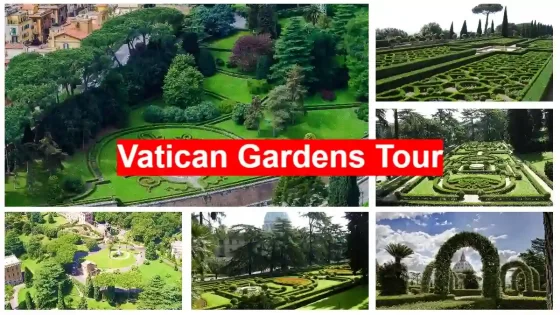
The Vatican Gardens are the ultimate Vatican hidden treasures, covering more than half of the entire city-state. I remember the first time I entered this private sanctuary; it felt like the noise of Rome had been instantly muted. Because the Pope still uses these gardens for reflection and exercise, access is strictly limited. You can’t just buy a ticket and wander; you must be part of an official guided tour or an open-top bus tour. In 2026, this exclusivity is what makes it one of the most sought-after Vatican secret spots. It is a place where nature, art, and faith coexist in a silence that is only broken by the ringing of the basilica’s bells or the occasional parrot flying overhead.
What You Can See in Vatican Gardens Tours
When you join a tour of the Vatican Gardens, you are stepping into a landscape that has been curated since 1279. One of the highlights I always tell people to look for is the massive topiary Papal Coat of Arms. It is meticulously replanted every time a new Pope is elected, currently displaying the insignia of Pope Francis in vibrant yellow and red flowers. As you move through the three different styles—Italian, French, and English—you’ll see how each era of the papacy left its mark. You’ll pass by the Casina of Pius IV, a stunning 16th-century villa that is one of the best Vatican hidden gems of Renaissance architecture. These tours are the only way to see Vatican secret areas like the Pope’s private helipad or the medieval fortifications that still guard the hill.
Hidden Features Inside the Gardens
The gardens are filled with hidden features inside the gardens that tell incredible stories. For instance, did you know there is a piece of the Berlin Wall tucked away here? It was donated to the Vatican as a symbol of the fall of communism and the role of the Church in that history. Another favorite of mine is the Fontana della Galera—a fountain featuring a detailed lead sculpture of a galleon that actually “fires” water from its cannons. There are also numerous grottoes dedicated to the Virgin Mary, including a replica of the Grotto of Lourdes, which serve as Vatican quiet areas for prayer. These Vatican hidden details turn a simple garden walk into a deep dive through global history and personal devotion.
Is Visiting Vatican Gardens Worth It
So, is exploring hidden Vatican worth it, specifically the gardens? In my honest opinion, absolutely. If you are someone who struggles with the intense crowds of the museums, the gardens offer the unique experience of seeing the Holy See at a human pace. The “Capturing Nature” family tours available in 2026 are particularly great if you are traveling with children, as they turn the visit into an interactive exploration of the environment. While the tickets are more expensive and require early booking, the view of St. Peter’s Dome from the rose garden is arguably the best photo spot in all of Italy. For those looking to find the Vatican off the beaten path, the gardens are the heart of that journey.
Hidden Details Most Tourists Walk Past
After spending countless hours wandering through Vatican City, I’ve realized that the real Vatican hidden gems aren’t always behind locked doors; often, they are sitting right in front of you, disguised as ordinary decor. Most visitors are so focused on the “big hitters” that they develop a sort of architectural tunnel vision. In 2026, with the sheer volume of information available, it’s easy to feel like you’ve seen it all before you even arrive in Italy. However, there is a distinct magic in training yourself to see the Vatican hidden details that the average traveler ignores. These small touches are the fingerprints of history, left by artists and popes who wanted to communicate something deeper than just wealth or power.
Small Artistic Details in Vatican Museums You Miss
One of the most fascinating Vatican exploration tips I can give you is to look at the floors as often as the ceilings. In the Greek Cross Room, for instance, there is a stunning 3rd-century mosaic of the goddess Minerva that people literally walk over every day. This is Vatican hidden art at its most functional. I also recommend heading to the newly renovated Miniature Mosaics gallery in the Library Galleries. Opened in 2025, this permanent exhibition features micromosaics where the enamel pieces are only a few millimeters long. It’s a testament to the “art of detail” that requires you to physically slow down to appreciate. If you don’t stop to look closely at these tiny masterpieces, you are missing one of the most delicate Vatican hidden treasures in the entire collection.
Symbolism Hidden in Vatican Architecture
The symbolism Vatican architecture employs is like a coded language. Take the Cortile della Pigna (Pinecone Courtyard), for example. The massive bronze pinecone—the Pigna—is a 1st-century Roman fountain that now stands as a symbol of immortality and rebirth. But look closer at the two bronze peacocks flanking it; they are replicas of 2nd-century originals that symbolize the “all-seeing” eye of the Church and the incorruptibility of the soul. This is a recurring theme in Vatican secret history: the repurposing of pagan symbols into Christian narratives. Even the modern “Sfera con Sfera” sculpture by Arnaldo Pomodoro in the center of the courtyard serves as a symbol of the complexity of the world and the potential for internal rot or rebirth. These aren’t just decorations; they are Vatican undiscovered spots of philosophical inquiry.
How to Train Your Eye to Notice Hidden Elements
Learning how to train your eye to notice hidden elements is the key to a unique experience in Italy. I always tell friends to look for the “anomalies.” Look for the papal coats of arms hidden in the corner of a fresco—like the Borgia bull or the Medici balls—which tell you exactly who funded the room and what their political message was. Notice the way the light hits the original 15th-century furniture in the Borgia Apartments, or the specific shade of “ultramarine blue” used by Fra Angelico in the Niccoline Chapel. When you stop looking for the “famous” and start looking for the “intentional,” the Vatican off the beaten path begins to reveal itself. This shift in perspective transforms a standard museum visit into a personal hunt for Vatican secret spots.
Best Ways to Discover Hidden Gems in the Vatican
In my years of navigating the winding corridors of Vatican City, I’ve learned that discovery is rarely an accident; it is the result of deliberate planning and knowing which doors to knock on. In 2026, the Vatican has become more accessible through specialized programming, but it remains a place where the “early bird” doesn’t just get the worm—they get the entire Sistine Chapel to themselves. Whether you are a solo traveler or looking for a unique experience with a group, the way you choose to enter these walls in Italy will define how many Vatican hidden gems you actually uncover.
Guided Tours That Focus on Hidden Vatican Spots
If you want to move beyond the surface, guided tours hidden Vatican experts lead are your best bet. I’ve recently seen a surge in “Special Access” itineraries that include the Niccoline Chapel and the original Bramante Staircase. These aren’t your standard “highlights” tours. They are designed for those who want to see the Vatican secret areas that are normally locked behind heavy wooden doors. Another incredible option is the “Key Master’s Tour,” where you actually walk through the museums at 6:00 AM with the Clavigero (the key keeper) as they open the doors for the day. Standing in the dark Gallery of the Maps as the lights are flicked on is one of those Vatican secret spots experiences that stays with you forever. These tours provide the context and access that transform a simple visit into a deep dive through Vatican secret history.
Self Guided Tips to Find Hidden Gems
For those who prefer a self guided Vatican hidden spots approach, my biggest piece of advice is to “walk backward” against the general flow of traffic where allowed. Most people are pulled like a magnet toward the Sistine Chapel. If you spend your first hour in the Pinacoteca (the Painting Gallery) or the Etruscan Museum, you will find yourself in Vatican quiet areas that feel miles away from the crowds. Use the official Vatican secret guide apps available in 2026, which often highlight Vatican hidden art and Vatican hidden details that aren’t on the physical maps. Look for the small, unassuming signage for the “Carriage Pavilion” under the Square of the Garden; it’s a massive underground space housing historic papal vehicles that most visitors miss entirely.
Best Time to Explore Quiet Areas
Timing is the most powerful tool in your Vatican exploration tips arsenal. In 2026, the Vatican Museums have extended their evening hours on Fridays and Saturdays, staying open until 8:00 PM. I’ve found that entering at 5:00 PM is a revelation. As the tour groups head out for dinner in Rome, the museums take on a ghostly, peaceful atmosphere. This is the best time explore hidden Vatican spots because the guards are more relaxed and the “Sistine shuffle” has completely vanished. If you are visiting St. Peter’s Basilica, aim for 7:00 AM. Standing in the nave as the first rays of Italy sun hit the marble floors is the ultimate way to find Vatican quiet areas without paying for a private tour.
Secret Vatican Stories and Legends
If walls could talk, the stones of Vatican City would likely never stop whispering. My favorite way to dig into the Vatican secret history is by leaning into the stories and legends that have survived for centuries. Some are grounded in historical fact, while others are the kind of tall tales that gain traction precisely because they are so mysterious. In 2026, with interest in hidden history peaking, these legends are what turn a simple stroll through Italy into a cinematic adventure. From the corridors of the museums to the depths of the basilica, every shadow seems to hold a narrative that challenges what we think we know about this sovereign state.
Famous Myths About Secret Rooms in the Vatican
One of the most persistent myths about Vatican secret rooms is the idea of a vault containing “apocalyptic prophecies” or the literal date of the end of the world. While I’ve searched for any shred of evidence of these “doom documents,” the reality is that the “secret” part of the archives refers to private correspondence, not a doomsday clock. Another legendary tale is the story of Pope Joan, a woman who allegedly disguised herself as a man and rose to the papacy in the 9th century, only to give birth during a procession. While modern historians largely debunk this as medieval satire, the legend was so strong that for years, people believed the Vatican used a special “perforated chair” to verify the gender of future popes. These Vatican secret myths add a layer of intrigue that makes every closed door in the palace feel a little more heavy with possibility.
Historical Stories Behind Hidden Spaces
The true historical stories behind hidden spaces are often more dramatic than the fiction. Take the Passetto di Borgo, for instance. This isn’t just a passageway; it is a monument to survival. In 1527, during the Sack of Rome, Pope Clement VII famously dashed across this elevated corridor as the Swiss Guard fought a desperate rearguard action to save him. When you look up at those fortified walls today, you aren’t just seeing architecture; you’re seeing a 500-year-old escape route that literally saved the papacy. Another fascinating spot is the Room of Tears (Stanza del Pianto) inside the Sistine Chapel. It’s a tiny, hidden room where every newly elected Pope is taken immediately after the vote. It’s called the Room of Tears because it is where the weight of the office—and the reality of their new life—finally hits them, often leading to an emotional release. These are the Vatican secret spots where history feels most alive.
Truth Behind Popular Vatican Legends
Navigating the truth behind popular Vatican legends requires a bit of detective work. For example, people often whisper about Vatican hidden art containing coded messages against the Church. While Michelangelo certainly had a tense relationship with his patrons, the “codes” people find today—like the anatomical brain in the Creation of Adam—were likely more about his passion for science and humanism than a secret rebellion. Another popular legend involves the Vatican holding the Menorah from the Second Temple of Jerusalem. While it was brought to Rome in ancient times, there is no physical evidence it remains in the Vatican secret areas today. Separating these Vatican secret myths from documented history is what makes being a traveler in Italy so rewarding; you learn to appreciate the Vatican off the beaten path not for the ghosts it might hold, but for the very real human triumphs and tragedies that actually occurred within its walls.
How to Avoid Crowds and Discover Quiet Places
If there is one thing I’ve learned from my time in Italy, it’s that the Vatican is less of a museum and more of a tidal wave. In 2026, the crowds are more intense than ever, but that doesn’t mean you have to be swept away by them. Avoiding the masses is the single best way to find Vatican hidden gems, because it’s nearly impossible to notice a “hidden” detail when you are being elbowed by twenty other people. My strategy for a unique experience has always been about timing and choosing the path less traveled. It requires a bit of discipline—like waking up before the sun—but the payoff is standing in a 500-year-old hall in Vatican City and hearing nothing but the sound of your own breathing.
Best Time to Visit Hidden Areas in Vatican
In 2026, the Vatican Museums have shifted their hours, and knowing this is your greatest advantage. They are now open Monday to Saturday from 8:00 AM to 8:00 PM. I’ve found that the absolute best time explore hidden Vatican areas is during the “shoulder hours.” Most tour groups arrive between 9:00 AM and 11:00 AM. If you can be at the entrance at 7:30 AM for an 8:00 AM entry, you have a golden hour of peace. Alternatively, entering after 3:00 PM is a game-changer. By late afternoon, the big groups are heading back to Rome for dinner, leaving the Vatican quiet areas to the late-stayers. On Friday and Saturday nights specifically, the museums stay open until 8:00 PM, and wandering through the Gallery of the Maps at dusk is an experience that feels almost ethereal.
Routes That Avoid Tourist Crowds
Most visitors follow a very predictable “main line” that leads directly to the Sistine Chapel. To find Vatican hidden locations, you have to break away from this line. I often suggest heading straight for the Pinacoteca (Painting Gallery) as soon as you enter. Since it’s near the entrance and away from the chapel, it remains one of the most reliable Vatican quiet areas all day long. Another tip for how explore Vatican beyond crowds is to seek out the Gregorian Etruscan Museum or the Carriage Pavilion. These sections are fascinating but lack the “blockbuster” status of the Raphael Rooms, meaning you can often enjoy Vatican hidden art in total solitude. It’s about taking an alternative route that values quality of experience over the quantity of famous statues seen.
Alternative Paths Through Vatican Museums
One of my favorite alternative paths through Vatican Museums involves the “reverse flow” technique. If you have the energy, head straight to the Sistine Chapel at 8:00 AM, spend your time there while it’s relatively quiet, and then work your way backwards toward the entrance. You’ll be moving against the crowd, but you’ll find that the galleries you rushed through earlier are now much emptier as the wave has moved on. This is the best way to spot Vatican hidden treasures like the smaller frescoes in the Borgia Apartments or the intricate floor mosaics that are usually covered by thousands of feet. In Italy, the most popular route is rarely the most rewarding one; the real Vatican secret spots are found when you decide to deviate from the herd.
Hidden Gems vs Main Attractions (What Should You Prioritize)
When you are planning your day in Vatican City, the biggest dilemma is always how to balance the heavy hitters with the Vatican hidden gems you’ve been dreaming of seeing. I’ve seen many travelers make the mistake of trying to see everything, only to end up with “museum fatigue” before they even reach the Sistine Chapel. In 2026, the strategy has changed slightly because of the extended hours in Italy. You no longer have to choose between the famous and the forgotten; you just have to be smart about your Vatican insider guide approach. Prioritizing isn’t about skipping the masterpieces; it’s about layering your visit so that you find a unique experience even within the most crowded galleries.
Should You Skip Famous Spots for Hidden Gems
One of the most common questions I get is: should you skip famous spots for hidden gems? My honest answer is no, but you should change how you see them. You shouldn’t come to Vatican City and skip the Raphael Rooms or St. Peter’s Basilica just to find an obscure courtyard. However, if the line for the “Cupola” climb is three hours long, that might be the moment to pivot to Vatican off the beaten path locations like the Pinacoteca. I’ve found that the “famous” spots are famous for a reason—they are world-class masterpieces. The goal is to find Vatican quiet areas around these attractions so you don’t feel like just another number in a crowd. Use the Vatican exploration tips of visiting the icons during the shoulder hours so you have the mental energy left for the Vatican hidden treasures.
Balancing Must See Attractions and Hidden Places
Finding the right flow for balancing must see attractions and hidden places is an art form. I like to use the “sandwich method”: start with a Vatican hidden gems spot to ground yourself, hit a major attraction while your energy is high, and then retreat to a Vatican quiet areas pocket to recover. For example, start your morning in the peaceful Vatican Gardens (if you’ve booked ahead), then move into the main museum flow for the Gallery of the Maps, and finally “hide” in the Gregorian Etruscan Museum for an hour. This way, you aren’t constantly fighting the tide. In Italy, the sensory input is high, so these Vatican secret spots act as a necessary palate cleanser between the gold-leaf ceilings and the massive marble statues.
Ideal Itinerary Including Hidden Gems
If I were designing an ideal itinerary including hidden gems for 2026, it would look something like this: Arrive at St. Peter’s Basilica at 7:00 AM to see the hidden chapels St Peter’s Basilica houses before the masses arrive. By 9:00 AM, head to the museums but bypass the main line with a pre-booked “special access” ticket. Spend your first hour in the Pinacoteca looking at Vatican hidden art. Around midday, when the central galleries are at their peak, head to the Carriage Pavilion—one of the best Vatican undiscovered spots—to see the historic papal Ferraris and carriages. Finish your day with a late-afternoon visit to the Sistine Chapel, using the alternative route through the Borgia Apartments. This plan ensures you see the icons while still experiencing the Vatican off the beaten path.
Common Mistakes When Looking for Hidden Gems in the Vatican
Even the most seasoned travelers in Italy can find themselves falling into traps when trying to navigate Vatican City. In 2026, the complexity of visiting the Holy See has only increased, making it even easier to miss the very Vatican hidden gems you came to see. I’ve made my fair share of mistakes over the years—like showing up at noon on a Monday only to find a line that stretched halfway to the Tiber—and I want to help you avoid that same frustration. Finding the Vatican off the beaten path requires more than just a map; it requires a shift in expectations and a deep understanding of how this ancient city-state actually breathes.
Expecting Secret Rooms Open to Public
The biggest mistake I see is people expecting secret rooms open to public access without any prior research. Many travelers arrive in Vatican City hoping to simply “stumble upon” the Vatican secret archives or the private papal apartments. The reality is that these restricted areas Vatican museums adjacent are heavily guarded for a reason. You won’t find a “Secret Rooms” sign in the lobby. If you want to see the Vatican secret areas, you have to be intentional. In 2026, this means booking “Special Access” tours months in advance. One of my favorite Vatican exploration tips is to manage your expectations: you won’t see everything, but if you prepare, you can see the things that 99% of other visitors miss.
Following the Main Route Only
If you spend your entire day following the main route only, you are essentially choosing a “fast-food” version of a five-course meal. The standard path is designed to move the 20,000+ daily visitors toward the Sistine Chapel as efficiently as possible. When you stick only to the red arrows, you miss the Vatican quiet areas like the Pinacoteca or the Etruscan Museum. I’ve noticed that people often treat the galleries leading to the chapel as “hallways” rather than destinations. This is where you miss the Vatican hidden art and the Vatican hidden details that make the collection so rich. Breaking away from the “herd” is the only way to find Vatican undiscovered spots where you can actually hear the echoes of history.
Rushing Through the Vatican Visit
Perhaps the most heartbreaking mistake is rushing through the Vatican visit. I’ve seen people literally run through the Gallery of the Maps just to get a spot at the front of the chapel. In doing so, they miss the Vatican hidden treasures right above their heads. In 2026, I recommend dedicating at least five to six hours to the museums alone. This allows you to find a unique experience by sitting on a bench for twenty minutes just to observe a single statue or a floor mosaic. When you rush, your brain stops processing the beauty and starts only seeing the crowds. To find the Vatican off the beaten path, you have to be willing to slow your pace until you are moving at the same speed as the art around you.
Real Visitor Tips for Finding Hidden Gems
If you want to move beyond the typical tourist experience in Italy, you have to listen to those who have spent years navigating the halls of Vatican City. In 2026, the best Vatican exploration tips aren’t found in a brochure; they are passed down through travelers who have learned how to reclaim their headspace in one of the world’s busiest religious sites. My time here has taught me that the difference between a stressful day and a unique experience is often just a matter of knowing a few insider tips Vatican hidden gems seekers swear by.
Insider Tips from Experienced Travelers
One of the best insider tips from experienced travelers is to pay attention to the “reverse flow” of the museums. While most people are following the one-way system toward the Sistine Chapel, you can often find Vatican quiet areas by heading straight to the Pinacoteca or the Etruscan Museum early in the morning. Another trick is to look for the “secret” shortcut from the Sistine Chapel to St. Peter’s Basilica. While it is technically reserved for tour groups, if you time it right and move with purpose, it can save you an hour of walking all the way around the outside walls in the heat of Rome. Also, don’t forget to bring a refillable water bottle; there are historic fountains throughout the Vatican where the water is perfectly cold and free, which is a total lifesaver during a long day of hunting for Vatican hidden treasures.
How to Slow Down and Explore More
Learning how to slow down and explore more is easier said than done when you are surrounded by thousands of people, but it is essential for finding Vatican hidden details. I recommend the “bench strategy.” Whenever you find a room with seating—like the Octagonal Courtyard—sit down for at least ten minutes. When you stop moving, your eyes start to catch the things others miss: the way the light hits a particular marble vein or a small inscription on a pedestal. This is how you discover Vatican hidden art in plain sight. In 2026, I’ve found that using an audio guide (which costs about €8) is actually a great way to force yourself to stay in one room longer, allowing the Vatican secret history to really sink in while the crowds rush past you.
Best Strategies to Enjoy Vatican Beyond the Crowds
If you are wondering how explore Vatican beyond crowds, my top strategy is to aim for the “shoulder hours.” Arriving at the basilica at 7:00 AM allows you to see the hidden chapels St Peter’s Basilica protects in near-silence. For the museums, the 2026 evening openings on Fridays and Saturdays are absolute gold. Entering at 5:00 PM means you are exploring just as the large tour buses are leaving. You can also look for the Vatican Mosaic Studio or the Vatican Pharmacy—two Vatican secret spots that are technically accessible but almost never visited by the average tourist. These Vatican off the beaten path locations provide the breathing room you need to appreciate the Holy See as a living, breathing city rather than just a museum.
Are Vatican Hidden Gems Worth It Honest Opinion
After wandering through the corridors of Vatican City more times than I can count, I’ve often asked myself: is the extra effort of finding Vatican hidden gems actually worth it? In 2026, with the sheer volume of travelers in Italy, it can be tempting to just follow the crowd, tick the Sistine Chapel off your list, and head out for gelato in Rome. However, in my honest opinion, the “hidden” side of the Holy See isn’t just a side quest; it is the soul of the experience. Without those moments of quiet and discovery, the Vatican can feel like a crowded train station. With them, it becomes a profound journey through time.
Pros and Cons of Exploring Hidden Areas
There is a trade-off when you go looking for Vatican secret spots. The pros are undeniable: you get a unique experience, you avoid the overwhelming “museum fatigue,” and you see Vatican hidden art that most people only read about in textbooks. Standing in a quiet room like the Miniature Mosaics gallery—reopened in 2025 with a stunning new layout—allows you to actually see the art rather than just glimpse it over someone’s shoulder. On the flip side, the cons involve a lot more planning. You often have to book Vatican special access months in advance, and these tickets are significantly more expensive than a standard entry. It requires more walking and a lot more patience. For me, the quiet reflection I find in Vatican quiet areas far outweighs the logistical headaches.
Who Will Enjoy Hidden Gems the Most
I’ve found that Vatican hidden treasures appeal most to two types of people. First, the “slow travelers” who aren’t interested in a checklist. If you are the kind of person who likes to sit in a courtyard and imagine the history of the stones beneath you, you will love finding Vatican undiscovered spots. Second, history buffs and art enthusiasts who want to understand the Vatican secret history beyond the surface-level facts. If you’ve already seen the “main” attractions on a previous trip to Italy, focusing on Vatican off the beaten path locations is the perfect way to fall in love with the city all over again. If you are a first-timer on a tight schedule, however, trying to find every secret might feel more like a chore than a discovery.
Final Recommendation Hidden Gems vs Classic Visit
My final recommendation is to aim for a “hybrid” approach. Don’t skip the classic visit, but “salt” it with Vatican hidden gems. In 2026, the Vatican Museums have standardized their hours from 8:00 AM to 8:00 PM every day except Sunday. Use this to your advantage! Do the classic “big hits” in the early morning or late afternoon, and spend the midday rush in Vatican quiet areas like the Carriage Pavilion or the Etruscan Museum. If you have the budget, booking one “Special Access” tour to see a restricted areas Vatican museums map section, like the Niccoline Chapel, will be the highlight of your entire trip to Italy. The Vatican is too large to see in one go, but if you look for the secrets, you’ll leave feeling like you’ve actually visited the city, not just walked through it.
Vatican Hidden Gems FAQs (Everything You Need to Know)
Navigating the complexities of Vatican City in 2026 can feel like a mission, especially when you are trying to look past the velvet ropes. After years of answering questions from fellow travelers in Italy, I’ve noticed that most people are searching for the same thing: a way to make this massive experience feel a little more personal. Here are the most common questions I get about finding the Vatican off the beaten path, answered with the perspective of someone who has spent far too many hours wandering these marble halls.
Are There Secret Rooms in Vatican
Yes, there are secret rooms Vatican legends describe, though they aren’t all “secret” in the conspiratorial sense. Most are simply Vatican secret areas used for administrative or private religious purposes. However, spaces like the Niccoline Chapel—the private chapel of Pope Nicholas V—or the Room of the Chiaroscuri are absolutely real. These are rooms decorated with Vatican hidden art by masters like Fra Angelico, and they remain under lock and key during standard visiting hours. While you won’t find them on a basic map, they are part of the very real architectural fabric of the Apostolic Palace.
Can You Visit Hidden Areas in Vatican
You can, but it requires being a bit of a strategic planner. In 2026, you cannot simply wander into restricted areas Vatican museums have on their staff maps. To see places like the Vatican Necropolis (the Scavi) or the Mosaic Studio, you have to book specific Vatican special access tours. For the Necropolis, you actually have to email the Excavations Office months in advance. Other Vatican secret spots, like the original Bramante Staircase, are occasionally opened for high-end private tours. If you are willing to invest the time and the budget, the doors to these Vatican hidden locations do eventually open.
What Are the Best Hidden Gems in Vatican
If I had to list the best hidden gems in Vatican for a 2026 visit, I’d start with the Pinacoteca. While not a “secret,” it is one of the most reliable Vatican quiet areas where you can see a Caravaggio without a crowd. Next is the Carriage Pavilion, a massive underground space that houses the “Popemobiles” of the past. For a unique experience, don’t miss the Gregorian Etruscan Museum; it’s filled with Vatican hidden treasures from pre-Roman Italy and is usually empty. Finally, the Vatican Gardens remain the ultimate outdoor hidden gem, offering a view of the dome that you simply can’t get from the street.
How to Explore Vatican Beyond Tourist Routes
To truly how explore Vatican beyond crowds, you have to master the art of the “side-step.” Start by entering St. Peter’s Basilica at 7:00 AM to see the hidden chapels St Peter’s Basilica protects in silence. When you move to the museums, consciously choose the alternative route through the Borgia Apartments or the Gallery of the Candelabra during the peak lunch hour when most people are in the cafeteria. In 2026, the Friday night openings are your secret weapon—exploring Vatican undiscovered spots by moonlight is the best way to avoid the heavy tour groups and feel the true spirit of the Holy See.