If you are looking for the ultimate Amsterdam travel guide, you have come to the right place because planning a trip to the “Venice of the North” requires more than just booking a flight and hoping for the best. I remember my first time stepping out of Centraal Station; the sheer chaos of bicycles, trams, and tourists was overwhelming, and I quickly realized that a “go with the flow” attitude would lead to long lines and missed opportunities. Over the years, through countless visits and local connections, I have distilled the essence of this vibrant city into a strategy that balances the must-see icons with the quiet, soulful corners that make Amsterdam truly special. This isn’t just about ticking boxes; it is about navigating the Netherlands like someone who actually knows where the best apple pie is hidden.
Why You Need a Smart Amsterdam Travel Plan (Not a Generic Itinerary)
Most people treat Amsterdam as a quick stopover or a weekend party destination, but that approach does a massive disservice to the depth of the city. A generic itinerary will tell you to visit the Dam Square and the Red Light District, but it won’t tell you how to avoid the soul-crushing crowds or how to time your visits to the world-class museums. When I first started Amsterdam trip planning, I fell into the trap of following “top ten” lists that sent me straight into tourist traps. A smart Amsterdam city guide focuses on the flow of the city—understanding how the concentric canal rings dictate movement and how the neighborhoods change personality from one street to the next.
Effective Amsterdam holiday planning is about making intentional choices. It means knowing that you can’t just walk into the Anne Frank House on a whim or that the weather can shift from sunshine to a downpour in the span of a coffee break. By having a Amsterdam vacation planner mindset, you aren’t rigid; you are prepared. You know which museum to visit when it rains and which park to head to when the sun finally breaks through the clouds. This guide is built on the philosophy that your time is the most valuable currency you have while traveling, and we are going to spend it wisely.
What Most First-Time Travelers Get Wrong in Amsterdam
The biggest mistake I see during Amsterdam sightseeing guide sessions is the “museum fatigue” and the “Damrak trap.” Many visitors spend their entire first day on the Damrak, the busy street leading from the station, which is filled with mediocre fries and overpriced souvenirs. They think this is the “real” Amsterdam, but it’s actually the least authentic part of the city. Another common error is underestimating the importance of pre-booking. I’ve seen people stand in the rain for hours because they didn’t realize that Amsterdam tourist attractions like the Van Gogh Museum require time-slot tickets weeks in advance.
Furthermore, many travelers fail to account for the “bike culture.” They walk in the bike lanes—which is a recipe for a very angry bell-ringing or a literal collision—and they don’t realize that the city is best experienced by getting away from the main transit hubs. If you want a smooth Amsterdam travel experience, you have to learn the unspoken rules of the street. Don’t be the person who spends three hours in a line when you could have been sipping a jenever in a historic brown cafe just two blocks away.
How Smart Planning Saves Time, Money, and Energy
When you engage in proper Amsterdam travel logistics, you are essentially buying yourself more vacation time. By grouping activities by neighborhood, you eliminate the need to crisscross the city constantly. For example, if you are visiting the Rijksmuseum, it makes sense to explore De Pijp afterward, rather than heading all the way back to the North. This kind of Amsterdam travel hacks approach ensures you aren’t exhausted by 4:00 PM.
From a financial perspective, Amsterdam budget travel isn’t about deprivation; it’s about optimization. Smart planning means knowing when to use a transport pass and when a simple walk is more rewarding. It means identifying the Amsterdam local tips that point you toward the “Dagdagelijkse markt” (daily markets) where you can eat like a king for a fraction of the price of a sit-down restaurant. Energy-wise, knowing the “off-peak” hours for popular spots allows you to enjoy the beauty of the canals without feeling like you are in a mosh pit.
Is Amsterdam Easy to Travel Without Planning?
In a word: No. While the Netherlands is incredibly efficient and almost everyone speaks perfect English, the popularity of the capital city has made it a victim of its own success. If you show up without a Amsterdam travel plan, you will likely find the best hotels fully booked, the most famous museums inaccessible, and the best restaurants requiring reservations. You might still have a “good” time, but you won’t have the “best” time.
The city is compact, which gives a false sense of simplicity. However, the nuances of the public transport system, the specific opening times of hidden courtyards, and the seasonal variations in events mean that a lack of preparation usually results in spending more money for a lesser experience. Even a little bit of Amsterdam local tips research can be the difference between a stressful trip and a magical one. We want you to feel like a guest of the city, not just another tourist taking up space.
Book a guided tour to understand the city’s history deeper through GetYourGuide here
How Many Days in Amsterdam Is Enough for Your Travel Style
One of the most frequent questions I get asked is exactly how much time you should carve out for this city. The beauty of Amsterdam is that it is remarkably compact, but it is also incredibly dense with culture. If you only have a layover, you can see the highlights, but if you have a week, you can truly start to feel like a local. For most people, I find that 3 to 4 days is the “sweet spot” for a first-time Amsterdam itinerary, allowing you to balance the major museums with a bit of aimless wandering through the 17th-century canal rings.
Your ideal length of stay depends entirely on your pace. Are you a “power sightseer” who wants to hit every museum, or do you prefer to spend three hours over a long lunch in a sun-drenched cafe? If you are planning to include day trips to the surrounding Netherlands countryside, you definitely want to lean toward the 4 or 5-day mark. Amsterdam trip planning becomes much more relaxed when you aren’t trying to cram a world-class art gallery and a trip to the windmills into the same twelve-hour window.
Amsterdam 1 Day Itinerary Route for First-Time Visitors
If you only have 24 hours, efficiency is your best friend. This Amsterdam 1 day itinerary route is designed to give you the greatest hits without leaving you exhausted. Start early at Dam Square—around 8:00 AM before the tour groups arrive—to admire the Royal Palace and the New Church in the morning light. From there, head directly to the Jordaan neighborhood for a quiet morning stroll along the Prinsengracht. You’ll pass the Anne Frank House, but remember, you must have your tickets booked weeks in advance to step inside.
For lunch, grab a world-famous apple pie at Winkel 43 in the Noordermarkt. In the afternoon, make your way toward the Museum Quarter. I recommend choosing just one big museum—the Rijksmuseum if you love Dutch masters like Rembrandt, or the Van Gogh Museum for a more focused, emotional journey. As the sun begins to set, hop on a canal cruise near the Centraal Station to see the city’s architecture from the water. Finish your day with a walk through the Red Light District to witness its unique (and crowded) nighttime energy before grabbing a late dinner in the Centrum.
Amsterdam 2 Day Itinerary With Efficient Walking Map
With a second day, you can slow down and explore the southern part of the city. This Amsterdam 2 day itinerary walking map begins in the Spiegelkwartier, the historic arts and antiques district. It’s a wonderful place to see high-end galleries and quirky shops. From there, it’s a short walk to the Leidseplein, a hub for street performers and nightlife, but in the morning, it serves as a great gateway to the Vondelpark. Spending an hour walking or lounging in this sprawling green oasis is essential for understanding the local lifestyle.
After soaking up the nature, head into De Pijp. This former working-class neighborhood is now the city’s trendiest spot. Walk through the Albert Cuyp Market, the largest outdoor market in the Netherlands, where you can try a fresh, warm stroopwafel. Spend your afternoon exploring the boutiques of the “9 Streets” (De Negen Straatjes), which are the most photogenic shopping blocks in the city. By grouping these southern and central districts together, you minimize your transit time and maximize your “wow” moments.
Secure your Albert Cuyp Market food tour through GetYourGuide here
Amsterdam 3 Day Itinerary With Hidden Gems Included
Day three is when the magic happens, as you move beyond the primary tourist trail. A smart Amsterdam 3 day itinerary with hidden gems starts with a visit to Ons’ Lieve Heer op Solder (Our Lord in the Attic), a remarkably preserved secret Catholic church hidden inside a 17th-century canal house. It is one of the most moving sites in the city and far less crowded than the major museums. Afterward, take the free ferry from behind Centraal Station over to Amsterdam Noord. This area is home to the NDSM Wharf, a former shipyard turned into a gritty, creative hub with massive street art murals and the STRAAT Museum.
In the afternoon, head back across the water to the Plantage district. Visit the Hortus Botanicus, one of the oldest botanical gardens in the world, which offers a peaceful escape from the canal bustle. For a truly “local” evening, skip the touristy bars and find a “Proeflokaal” (tasting house) like Wynand Fockink to sample traditional Dutch jenevers in a setting that hasn’t changed since the 1600s. This day proves that Amsterdam travel tips aren’t just about saving money; they are about finding the city’s true heart.
Is 4–5 Days in Amsterdam Too Much?
Honestly, I’ve never heard anyone say they spent too much time in Amsterdam. With 4 or 5 days, you have the luxury of “slow travel.” You can spend an entire morning just reading a book at a canal-side cafe without feeling guilty about missing a landmark. It also gives you the perfect window to explore the Netherlands beyond the capital. A 4-day stay allows for a full-day excursion to the windmills of Zaanse Schans or the tulip fields of Keukenhof in the spring, while still leaving your evenings free for the city’s excellent dining scene.
Having those extra days also means you can explore specific interests. If you are a fan of architecture, you can take a deep dive into the Amsterdam School style in the Spaarndammerbuurt neighborhood. If you are a foodie, you can dedicate a whole afternoon to a “hidden food tour” of the West or East districts. When people ask, “how many days in Amsterdam is enough,” I always say that while you can see the city in two, you can start to love the city in five.
Best Time to Visit Amsterdam (Weather, Crowds & Prices Breakdown)
Choosing the right time to visit the Netherlands is as much about managing your expectations as it is about checking the forecast. I’ve visited in every season, and each version of Amsterdam feels like a different city. In 2026, the city has seen a significant increase in travel costs due to new tax regulations, with the tourist tax reaching 12.5%—one of the highest in the world. This makes your timing even more critical for balancing your budget with the experience you want.
Generally, the peak season runs from April through September. This is when the city is at its most vibrant but also its most expensive and crowded. If you prefer a quieter experience, the “deep winter” months of January and February offer the lowest accommodation prices and the shortest lines, though you’ll need to brave the damp, chilly North Sea winds.
Amsterdam in Spring (Tulips, Festivals, Crowds Explained)
Spring is arguably the most iconic time for a visit, specifically during the Amsterdam Tulip Festival 2026, which runs from March 19 to May 10. This period coincides with the opening of Keukenhof Gardens, and the city itself is transformed by thousands of blooming tulips in public squares. The “sweet spot” for peak bloom is usually mid-April. However, be warned: this is also the most crowded time of year.
The highlight of spring is King’s Day (Koningsdag) on April 27, 2026. The entire city turns orange, and the canals become a gridlock of party boats. It is an unforgettable experience, but hotel prices skyrocket, and the city center becomes one massive flea market and street party. If you visit in spring, my best Amsterdam travel tips are to book your accommodation at least six months in advance and always carry a high-quality rain jacket, as “April showers” are a very real phenomenon in the Netherlands.
Amsterdam Summer Travel Guide (Costs and Crowd Strategy)
Summer in Amsterdam is characterized by long daylight hours—with the sun not setting until nearly 10:00 PM in July—and a calendar packed with outdoor festivals. Temperatures are usually a pleasant 20°C to 23°C (68°F to 73°F), making it perfect for canal-side dining and cycling. However, this is the height of the tourist season. Dam Square and the Museum Quarter can feel overwhelmed by midday.
My Amsterdam summer travel guide strategy for beating the heat and the crowds is simple: go early or go late. Visit the major museums right at 9:00 AM, and spend your afternoons in the cooler, leafier neighborhoods like the Plantage or the Vondelpark. If you are visiting in late July or early August, you might catch Amsterdam Pride, where the famous Canal Parade draws over 500,000 spectators. Because demand is at its peak, expect to pay the highest rates for hotels and to find that popular restaurants require reservations days in advance.
Amsterdam in Autumn (Underrated Travel Season Guide)
If you ask me, autumn is the most underrated travel season. As the leaves on the 400,000 trees lining the canals turn to gold and burnt orange, the city takes on a cozy, cinematic quality. September still offers mild weather, while October brings the Amsterdam Dance Event, the world’s largest electronic music festival. By November, the crowds thin out significantly, and the “brown cafes” become the perfect refuge from the crisp air.
Prices for accommodation begin to dip in October and November (excluding festival weekends), making it a great time for a mid-range travel budget. The light in autumn is particularly beautiful for photography, especially during the “golden hour” when the low sun reflects off the canal water. It’s a season for slow walks, art galleries, and indulgent Dutch comfort food like “stamppot.”
Amsterdam Winter Travel Guide (Is It Worth Visiting?)
Is it worth visiting in winter? Absolutely, provided you pack enough layers. While the weather can be gray and rainy, Amsterdam in winter is magical in a very different way. The Amsterdam Light Festival usually runs from December through early January, featuring stunning light installations along the canals that are best seen from a boat. If it gets cold enough—though it’s rare—the canals actually freeze over, and the locals break out their skates for a city-wide party on the ice.
The major benefit of a winter trip is the cost. In 2026, mid-range hotel rates in January and February can drop by as much as 40-50% compared to the summer peak. You can often walk into the Rijksmuseum without a pre-booked slot (though I still recommend one), and the city feels like it belongs to the locals again. Plus, there is nothing more “gezellig” (the Dutch concept of cozy togetherness) than sitting by a fireplace in a historic pub with a glass of spiced mulled wine or a thick hot chocolate.
Book an Amsterdam Light Festival canal cruise through GetYourGuide here
Where to Stay in Amsterdam (Best Areas Based on Travel Goals)
Choosing your “home base” in Amsterdam is a decision that will define your entire experience. In 2026, the city remains one of the most expensive in Europe for accommodation, largely due to a record-high tourist tax of 12.5% and a VAT increase on overnight stays. However, each neighborhood offers a distinct flavor. Whether you want to wake up to the sound of canal bells or stay in a gritty, creative hub, the Netherlands capital has a corner for you.
When Amsterdam trip planning, I always tell people to look beyond the immediate vicinity of Centraal Station. While convenient, the heart of the Centrum can be noisy and crowded. Exploring the concentric rings and the outer neighborhoods is where you’ll find the “real” city atmosphere.
Best Area to Stay in Amsterdam for First-Time Visitors
For your first visit, I highly recommend the Grachtengordel (the Canal Ring) or the Jordaan. This is the postcard-perfect Amsterdam you’ve seen in movies. Staying here puts you within walking distance of the Anne Frank House, Dam Square, and the “9 Streets.” It’s an area where the 17th-century architecture feels like a living museum.
The benefit of the Jordaan specifically is its blend of history and local life. It was originally a working-class district, but today it is filled with independent boutiques, cozy “brown cafes,” and some of the most beautiful narrow streets in the Netherlands. It is central enough to reach the sights easily but quiet enough to offer a peaceful night’s sleep.
Amsterdam Neighborhood Guide (Centrum vs Jordaan vs De Pijp)
The Centrum is the historic core. It’s perfect if you want to be in the middle of everything, but it’s also the most tourist-heavy area. If you enjoy the buzz of nightlife and want to be steps away from Rembrandtplein or the Red Light District, this is your spot. However, be prepared for more “commercial” vibes and higher-priced, smaller hotel rooms.
De Pijp, located just south of the center, is my personal favorite for a “local” experience. It’s the city’s Latin Quarter, known for the Albert Cuyp Market and a staggering density of brunch spots and bars. It’s vibrant, multicultural, and slightly more affordable than the Canal Ring.
Museum Quarter (Oud-Zuid) is the best choice if your main goal is high culture. It’s elegant, safe, and home to the Rijksmuseum and Vondelpark. The streets here are wider, the architecture is grander, and it feels much more refined than the bustling center.
Budget Accommodation in Amsterdam (Cheap but Smart Choices)
Finding “cheap” sleep in 2026 requires a bit of a Amsterdam travel hacks approach. In Amsterdam, budget hotels typically range from €100 to €180 per night, while hostel dorms go for €40 to €65. To get more value, look toward Amsterdam Noord or Amsterdam Oost.
In Noord, you can stay at places like ClinkNOORD, which is just a free, 3-minute ferry ride from Centraal Station. It’s a creative neighborhood that feels worlds away from the tourist crush. In the East (Oost), hotels like the Social Hub or Generator Amsterdam offer trendy, communal vibes at a fraction of the cost of a canal-side boutique. Another smart move is Zuideramstel, where brands like Motel One offer consistent quality with easy tram links that get you to the center in 15 minutes.
Luxury Hotels in Amsterdam Worth the Price
If you are looking to splurge, Amsterdam has some of the most unique luxury properties in the world. For the quintessential canal-house experience, Pulitzer Amsterdam is unbeatable—it’s actually a maze of 25 interconnected 17th and 18th-century houses. Watching the boats glide by from a “Canal View Suite” is one of those bucket-list moments that truly justifies the €350–€1,000+ per night price tag.
For those who prefer classic elegance, the Waldorf Astoria on the Herengracht or the opulent Hotel Estheréa offer impeccable service and historical charm. These hotels aren’t just places to sleep; they are part of the city’s heritage. In 2026, many of these luxury spots also offer private salon boat tours, allowing you to see the Netherlands‘ capital in total privacy and style.
Amsterdam Travel Costs Breakdown (Real Budget Planning Guide)
If you have visited the Netherlands in the past, you might find that prices in 2026 have shifted significantly. Amsterdam has never been a “cheap” destination, but a recent overhaul in tax structures—including a massive increase in VAT on accommodation from 9% to 21%—means that your Amsterdam travel cost planning needs to be more precise than ever.
Today, the city uses its fiscal policy to manage the high volume of visitors, making it one of the most expensive hubs in Europe. However, with a clear breakdown, you can still navigate the canals without breaking the bank. On average, a visitor in 2026 should expect to spend between €120 and €280 per day, depending on their comfort level and how many “must-see” attractions they squeeze in.
Average Daily Cost in Amsterdam for Budget Travelers
For those focused on Amsterdam budget travel, it is entirely possible to enjoy the city for around €120 per day. This requires a bit of discipline and a heavy reliance on the city’s excellent street food and free experiences. Your biggest expense will be a hostel dorm bed, which currently ranges from €40 to €65 per night.
To keep food costs down, I suggest a breakfast from a local bakery (€5–€8) and a lunch at the Albert Cuyp Market, where you can get a fresh herring sandwich or a large stroopwafel for under €10. Dinner at a casual “eetcafé” or a local pizzeria will run you about €15–€20. When you add a GVB public transport day pass (€9–€13) and one museum entry, you are right at that budget mark. My favorite budget tip? The best view of the city is free—just take the ferry to Amsterdam Noord and walk along the waterfront.
Mid-Range Travel Budget in Amsterdam Explained
Most visitors fall into the mid-range travel budget in Amsterdam category, which averages around €220–€270 per day. This budget allows for a private room in a comfortable 3-star hotel or a well-located Airbnb (€180 per night on average).
At this level, you can enjoy a sit-down breakfast at a café (€12), a nice lunch in the Jordaan (€25), and a three-course dinner at a quality restaurant (€35–€55 per person). This also covers more flexibility with activities, such as a canal cruise and entries to at least two major landmarks like the Rijksmuseum and the Anne Frank House. You won’t be living in total luxury, but you certainly won’t be counting every Euro, allowing for that extra glass of Heineken or a craft beer at a local brewery.
Luxury Travel Cost in Amsterdam Per Day
If you are looking for the “gold standard” experience, the luxury travel cost in Amsterdam per day starts at €550 and can easily climb to €1,000+. This includes staying in a 5-star canal-front hotel (€350–€1,000+), where the 12.5% tourist tax alone can be more than a budget traveler’s entire daily spend.
Dining at this level involves Michelin-starred establishments or upscale waterfront restaurants, where dinner for two can exceed €250. You’ll likely skip the tram for private taxis or Uber rides (€30–€50 per trip) and perhaps book a private salon boat for a sunset cruise (€150–€250 per hour). For the luxury traveler, Amsterdam offers an incredible level of exclusivity and heritage that is hard to find elsewhere in the Netherlands.
How Expensive Is Amsterdam Compared to Other European Cities?
In 2026, Amsterdam sits firmly in the upper tier of European travel costs. While it is slightly more affordable than London or Paris (where daily mid-range costs can hit €240–€250), it is significantly pricier than Berlin (€180) or Vienna (€200). If you are coming from Central Europe, cities like Prague (€140) or Budapest (€130) will make Amsterdam feel like a serious splurge.
The high cost of living in the Netherlands is reflected in the price of simple pleasures; a local beer (0.5L) in a pub now costs €7–€9, and a cappuccino is roughly €5. However, the infrastructure, safety, and sheer beauty of the city often justify the premium. You aren’t just paying for a room and a meal; you are paying for the privilege of being in one of the most well-preserved and culturally rich urban spaces in the world.
Check out this Amsterdam budget-friendly canal tour through GetYourGuide here
Amsterdam Transportation Guide (How to Get Around Efficiently)
One of the things I love most about the Netherlands is how effortlessly everything moves. In Amsterdam, the transport system is a masterpiece of clockwork efficiency, but for a first-timer, the choice between trams, ferries, and those ubiquitous bicycles can be a bit dizzying. In 2026, the city has moved toward a completely cashless and increasingly digital transit model. Whether you are arriving at the airport or trying to cross a canal, the key to a stress-free experience is knowing which “key” unlocks the city’s grid.
The most important Amsterdam travel tips I can give regarding transport are centered on OV-pay. You no longer need a physical plastic card for most trips; you can simply tap your contactless debit card, credit card, or smartphone on the yellow readers when you enter and exit. However, if you plan on being a “power user,” specialized passes still offer the best value for your Amsterdam travel cost budget.
How to Use Amsterdam Public Transport (Tram, Bus, Metro Guide)
The iconic blue-and-white trams are the lifeblood of the city center. They are frequent, clean, and offer a great “poor man’s tour” of the streets. For 2026, a GVB 1-hour ticket costs €3.40, but if you’re making more than three trips a day, the GVB day passes are the way to go. A 24-hour pass is €10.00, while a 3nd-day (72-hour) pass drops the daily average significantly at €21.50.
The metro is your best bet for reaching outer districts like Amsterdam Noord or Zuid quickly. If you are staying in the Centrum, you’ll likely use the North-South Line (M52), which is a marvel of modern engineering. Remember: you must “check in” and “check out” at the gates or poles every single time, even when transferring. If you forget to tap out, the system will charge you a default “missed check-out” fee, which can eat into your budget.
Is Renting a Bike in Amsterdam Worth It for Tourists?
This is a controversial topic among locals. Cycling is the fastest way to get around the Netherlands, but Amsterdam‘s bike lanes are not for the faint of heart. In 2026, renting a standard city bike costs between €12 and €18 per day, with e-bikes ranging from €25 to €40. If you are a confident cyclist, it is absolutely worth it for the freedom it provides to explore neighborhoods like the Jordaan or Amsterdam West.
However, if you haven’t been on a bike in years, Amsterdam is not the place to “relearn.” The pace is fast, and the locals have zero patience for tourists who stop in the middle of a bike lane to check a map. If you do rent, my best Amsterdam local tips are: always use both locks provided, never cycle on the sidewalk, and watch out for tram tracks—if your tire gets caught in one, you will go down. For a more relaxed experience, try cycling in the Vondelpark or across the water in the quieter streets of Noord.
Amsterdam Walking Routes Map for First-Time Visitors
Despite the bikes and trams, Amsterdam is a city built for walking. The historic center is surprisingly small. A classic Amsterdam walking route map first time visitors should follow starts at Centraal Station, moves through the Dam Square, and weaves through the “9 Streets” toward the Westerkerk. This route allows you to see the transition from the medieval core to the grander 17th-century canal rings.
Another fantastic route is the “Southern Circle,” which takes you from the Leidseplein, through the Spiegelkwartier (antiques district), and ends at the Magere Brug (Skinny Bridge) on the Amstel River. Walking is the only way to truly notice the “dancing houses” (the tilted canal buildings) and the hidden “hofjes” (inner courtyards) that make the Netherlands so charming. Just remember to always keep an eye out for those silent, fast-moving cyclists whenever you cross a street!
Airport to City Center Amsterdam Transport Options Explained
Arriving at Schiphol Airport is a breeze. In 2026, the most efficient way to reach the center is the NS Train. It takes only 17 minutes to reach Amsterdam Centraal, and a one-way ticket costs €5.90 (or €6.20 if you buy a disposable paper ticket). Trains run every few minutes from platforms directly beneath the airport terminal.
If you are staying near Leidseplein or the Museum Quarter, the Amsterdam Airport Express (Bus 397) is actually more convenient. It costs €6.50 one-way and drops you right in the heart of the hotel districts. For those with a lot of luggage, a taxi or Uber will cost between €50 and €80. If you want a “smart” start to your trip, consider the Amsterdam Travel Ticket (€20 for 1 day / €34 for 3 days), which covers your train from the airport plus all GVB trams, buses, and metros during your stay.
Book your Amsterdam Airport Express bus ticket through GetYourGuide here
Amsterdam Attractions Planning Strategy (See More in Less Time)
In 2026, Amsterdam has become a masterclass in crowd management, which means your “strategy” is just as important as your destination. The days of simply wandering into a world-famous gallery are gone; the city now operates almost entirely on pre-booked time slots. To see more in less time, you have to think like a local and move against the grain of the typical tourist flow.
My golden rule for Amsterdam sightseeing guide success is the “Rule of One”: pick one major landmark for the morning and spend the rest of the day exploring the surrounding open-air “museum” that is the city itself. This prevents the dreaded “museum fatigue” and ensures you actually experience the Netherlands beyond a gift shop.
Must-See Attractions in Amsterdam for First-Time Visitors
If it’s your first time in the Netherlands, there are three “pillars” you cannot miss. The Rijksmuseum is the crown jewel, housing Rembrandt’s Night Watch. In 2026, you can still witness “Operation Night Watch,” a massive live restoration project happening right before your eyes. Second is the Van Gogh Museum, which holds the world’s largest collection of his work. Be aware that tickets for 2026 are online only and often sell out 2 to 4 weeks in advance.
Finally, the Anne Frank House remains the city’s most moving site. Strategy Tip: Tickets are released every Tuesday at 10:00 AM CET for visits six weeks out. If you don’t snag one then, your chances of getting in are slim. Beyond these, a walk through the Dam Square and a visit to the Royal Palace will round out your essential history lesson of the Centrum.
Amsterdam Hidden Gems Most Tourists Miss
To escape the 2026 crowds, you need to look up and look away. One of my favorite Amsterdam hidden gems is Ons’ Lieve Heer op Solder (Our Lord in the Attic). It’s a 17th-century “secret” church built into the top three floors of a canal house—a stunning reminder of the city’s history of religious tolerance. For something truly unique, visit the KattenKabinet, a quirky art museum dedicated entirely to cats, located in a beautiful canal mansion.
If you want a modern vibe, head to AMAZE Amsterdam in the West, an immersive audiovisual experience in a former nightclub, or the STRAAT Museum in Noord for world-class street art. These spots rarely have the soul-crushing lines of the Museum Quarter but offer just as much cultural “wow” factor. For a free hidden gem, go to the top floor of the OBA Library near Centraal Station for the best panoramic view of the city without paying for a viewing platform.
Museums in Amsterdam Worth Visiting vs Skipping
With so many options, you have to be ruthless. The Rijksmuseum and Van Gogh Museum are absolutely “worth it,” but they require a half-day each. If you are short on time, the Moco Museum is a great “boutique” alternative, featuring Banksy and contemporary art in a much smaller, more digestible villa. The Maritime Museum (Scheepvaartmuseum) is a must if you have kids; climbing onto the replica East Indiaman ship is a highlight for any age.
On the “skip” list for most travelers? I would suggest avoiding the high-priced, generic tourist attractions on the Damrak, like the Torture Museum or Madame Tussauds, unless you have a specific passion for them. They are expensive and don’t offer the unique Dutch heritage you can find elsewhere. Similarly, the Heineken Experience is fun if you love the brand, but for a more authentic “tasting” experience, a historic “brown cafe” or a local craft brewery like Brouwerij ‘t IJ (located in a windmill!) offers far more character for less money.
Best Canal Cruise in Amsterdam (Which One to Choose?)
You haven’t seen Amsterdam until you’ve seen it from the water. In 2026, there are three main ways to do this. For a standard 60-75 minute introduction, the large glass-topped boats near Centraal Station are efficient and often included in the I Amsterdam City Card. However, they can feel a bit like a “bus on water.”
For a better experience, I recommend an open-boat cruise or a luxury saloon boat. These smaller, electric vessels can navigate the narrower, prettier canals that the big boats can’t reach. Look for “Golden Hour” or sunset cruises for the best photography lighting. If you want something social, the “Cheese and Wine” cruises or the “Unlimited Drinks” boat tours are popular for groups. Just remember to check if your boat is 100% electric—it’s the quietest and most eco-friendly way to enjoy the UNESCO-protected canal belt.
Book your tickets for a high-rated Amsterdam canal cruise through GetYourGuide here
Amsterdam Itinerary Blueprint (Step-by-Step Smart Routes)
The key to a successful visit to the Netherlands capital is flow. In 2026, with the city being more popular than ever, a “logical route” isn’t just a suggestion—it’s your defense against fatigue. I’ve spent years walking these canals, and the biggest mistake I see is people zig-zagging across the city without a plan. By grouping your activities geographically, you save at least two hours of transit time every day.
Whether you have 24 hours or a full week, these blueprints are designed to keep you in the moment rather than staring at a navigation app. We’ll start in the medieval heart and radiate outward, just as the city was built over the centuries.
1 Day Amsterdam Walking Route Map With Stops
If you only have one day, you need to be at Dam Square by 7:30 AM or 8:00 AM. At this hour, the Royal Palace and the National Monument are yours alone for photography. From there, follow this specific Amsterdam 1 day itinerary route: walk behind the Palace to the Westerkerk, then loop through the Jordaan. This is the most efficient way to see the “Big Three” canals—Herengracht, Keizersgracht, and Prinsengracht—before the crowds peak at 11:00 AM.
For your midday stops, head to the Spui square to see the Begijnhof, a hidden 14th-century courtyard that offers a pocket of total silence. Grab a quick “Vlaamse frites” (Flemish fries) nearby, then make your way to the Flower Market (Bloemenmarkt). While touristy, it’s a necessary stop for the colors. Conclude your afternoon at the Museum Quarter for a pre-booked slot at the Rijksmuseum, and finish your evening with a sunset canal cruise departing from near the Leidseplein.
2 Day Amsterdam Itinerary With Logical Route Planning
With a second day, we shift our focus to the “Outer Rings” and the creative Amsterdam Noord. Start your morning in De Pijp. Walk through the Albert Cuyp Market just as the vendors are setting up (around 9:30 AM) to get the freshest stroopwafels. This neighborhood is logically positioned for a post-market stroll into the Vondelpark, the city’s green lung.
After lunch in the Oud-West area (try the Foodhallen for variety), head back to Centraal Station and take the free ferry to NDSM Wharf. This 15-minute boat ride is a highlight in itself. Spend your afternoon exploring the STRAAT Museum and the gritty, artistic vibe of the north. This Amsterdam 2 day itinerary with logical route planning ensures you see both the 17th-century heritage and the 21st-century innovation of the Netherlands without feeling like you’re rushing.
3 Day Amsterdam Itinerary Including Day Trips
By day three, you’ve earned the right to see the countryside. A smart Amsterdam 3 day itinerary with day trips starts with an early morning train to Zaanse Schans (only 20 minutes away). Here, you can see working windmills and traditional clog-making. If you are visiting in 2026 between March and May, swap this for a trip to Keukenhof Gardens in Lisse.
Return to the city by mid-afternoon and dedicate your final evening to the Plantage district. Visit the Hortus Botanicus or the Jewish Historical Museum. This area is much quieter than the Centrum and provides a dignified, thoughtful end to your trip. For your final Dutch dinner, find a cozy “Stamppot” spot in the East (Oost) neighborhood, which has some of the most authentic dining gems in the city.
Flexible Amsterdam Travel Plan Based on Interests
Not everyone wants a rigid schedule, so I like to provide a “choose your own adventure” framework. If you are an Art Lover, your blueprint should center on the Museum Quarter and the Spiegelkwartier. If you are a History Buff, focus on the Anne Frank House, the Resistance Museum, and the Maritime Museum.
For the Urban Explorer, I suggest spending more time in Amsterdam West and the Indische Buurt, where the local multicultural fabric of the Netherlands is most visible. The beauty of a flexible Amsterdam travel plan is that the city’s transport is so good that even if you change your mind at noon, you are never more than 20 minutes away from a completely different vibe. Just remember to keep your “anchor” activities—the ones requiring tickets—locked in, and let the rest of the day breathe.
Book a day trip to Zaanse Schans through GetYourGuide here
Best Things to Do in Amsterdam Based on Travel Style
In 2026, Amsterdam has refined its identity to cater to every kind of wanderer. Whether you are navigating the canals alone, seeking a romantic escape, or managing a family adventure, the city’s infrastructure—from the seamless OV-pay contactless transport to the expanded pedestrian zones—makes it remarkably accessible. The “smart” way to approach the city is to match your pace to the neighborhood; the energetic Centrum for the icons, the quiet Jordaan for romance, and the sprawling parks for families.
Experience has taught me that the best “to-do” list isn’t about doing everything, but about doing the right things for your group. Below is how I recommend tailoring your Amsterdam travel experience to fit your specific travel style in 2026.
Amsterdam Solo Travel Guide (Safe and Efficient Plan)
Amsterdam is widely considered one of the safest cities in Europe for solo travelers, including women. Violent crime is extremely low, and the city’s layout means you are rarely truly “isolated.” For a solo mission, focus on the Jordaan and De Pijp. These areas are filled with “social hubs” like local markets and bookstores where being alone feels perfectly natural.
My top safety tip for 2026: while the Red Light District is heavily policed and safe during the day, it can become rowdy after 11:00 PM. If you are solo, stick to the well-lit main canals like the Prinsengracht for late-night walks. To meet people without the pressure of a bar, join a free walking tour or a “social boat cruise” where the atmosphere is geared toward conversation. Always keep your phone charged—Amsterdam is easy to navigate, but those concentric canal rings can look very similar after a few wrong turns!
Amsterdam for Couples Romantic Itinerary Ideas
For couples, the Netherlands capital is essentially a living movie set. In 2026, the most romantic way to experience the city is a private saloon boat cruise. Unlike the large tourist boats, these are small, often 100% electric, and allow you to sip a glass of prosecco while gliding under the Magere Brug (Skinny Bridge). Legend says that if you kiss your partner under this bridge, you will stay together forever—a bit cliché, perhaps, but the view of the lights reflecting on the Amstel is undeniably magical.
Beyond the water, spend an evening at the Pathé Tuschinski. It is frequently cited as one of the most beautiful cinemas in the world, with its Art Deco and Art Nouveau interiors. Book a “Love Seat” in the private boxes for a truly vintage romantic experience. For dinner, skip the busy squares and find a candlelit “brown cafe” in the Utrechtsestraat area, where the atmosphere is intimate and the food is hearty.
Book a romantic sunset canal cruise for two through GetYourGuide here
Amsterdam With Kids Travel Plan (Family-Friendly Activities)
Traveling to the Netherlands with children is surprisingly easy thanks to the abundance of green space and interactive museums. The NEMO Science Museum is the undisputed king of family activities; its green, sloping roof is a giant terrace where kids can play with water features while parents enjoy one of the best views of the city.
For 2026, I also highly recommend the National Maritime Museum (Het Scheepvaartmuseum). Kids can explore a full-scale replica of an 18th-century merchant ship, which is far more engaging than a standard history lesson. If the weather is nice, head to the Vondelpark‘s “Groot Melkhuis,” which has a fantastic playground and a cafe. If it rains, TunFun—an indoor playground located in an old underground traffic tunnel—is a local lifesaver for burning off energy.
Amsterdam Budget Travel Tips That Actually Work
If you want to keep your Amsterdam travel cost low in 2026, you have to be strategic about the “Big Two”: food and transport. First, never buy breakfast at your hotel. A typical hotel breakfast can cost €15–€25, whereas a local bakery or a supermarket like Albert Heijn can provide a fresh croissant and coffee for under €6.
Second, utilize the “picnic strategy.” In the summer and spring, join the locals and grab some Dutch cheese, crackers, and a bottle of wine from a shop and head to the Museumplein or the banks of the Amstel. It’s the most “Amsterdam” meal you can have, and it costs a fraction of a restaurant bill. Also, remember that the ferries to Amsterdam Noord are completely free—it’s the best “cruise” in the city if you are on a tight budget. Finally, check if the I Amsterdam City Card makes sense for you; if you plan on visiting more than three major museums and using public transport heavily, it usually pays for itself by the second day.
Amsterdam Food & Dining Guide (Where and What to Eat)
In 2026, the Amsterdam food scene has evolved into a fascinating mix of high-concept Mediterranean comfort food, “modern classics,” and a renewed appreciation for traditional Dutch roots. While the city has always been a melting pot, the current trend leans heavily toward sustainability and “affordable luxury.” You can find everything from a Michelin-starred meal to a world-class snack pulled from a vending machine wall, often within the same block.
The key to eating well in the Netherlands capital is to embrace the “snack culture” during the day and save your energy for the vibrant evening dining scenes in neighborhoods like De Pijp and Amsterdam Oost. Just a heads up: many of the best local spots have moved away from cash entirely in 2026, so make sure your contactless payment or debit card is ready to tap.
What to Eat in Amsterdam First-Time Visitor Food Guide
If this is your first trip to the Netherlands, your culinary “rite of passage” begins with the classics. Start with a Stroopwafel—two thin waffles held together by a layer of gooey caramel. In 2026, you can get these fresh and warm at the Albert Cuyp Market for about €2 to €3. If you’re feeling brave, head to a “haringhandel” (herring stand) for Hollandse Nieuwe. The traditional way to eat this raw, brined fish is by holding it by the tail and sliding it into your mouth, though most first-timers prefer it sliced in a “broodje” (bun) with onions and pickles.
For a mid-afternoon pick-me-up, Dutch Apple Pie (Appeltaart) is mandatory. Unlike the American version, it is deep-dish, packed with cinnamon-spiced apples and raisins, and has a crumbly, cake-like crust. And of course, there is the Bitterballen—savory, deep-fried gravy-filled balls typically served with sharp mustard. They are the ultimate “borrel” (snack) to enjoy with a local craft beer.
Best Dutch Foods to Try in Amsterdam
Beyond the street snacks, there are several traditional dishes that define the Dutch palate. Stamppot is the ultimate comfort food: mashed potatoes mixed with vegetables like kale or sauerkraut, served with a large smoked sausage (rookworst) and a well of savory gravy. While it’s traditionally a winter dish, you can find refined versions of it year-round at places like The Pantry or Moeders.
Another must-try is the Broodje Kroket. In 2026, a classic beef croquette from the famous FEBO snack walls costs around €3.30. It sounds simple, but the contrast between the crunchy shell, the creamy interior, and the soft white bun is a local obsession. For a sweeter treat, look for Poffertjes—tiny, fluffy buckwheat pancakes served with a massive dollop of real butter and a mountain of powdered sugar. A small portion at a street market will run you about €4 to €6.
Affordable Restaurants in Amsterdam That Are Worth It
Eating out on a budget in 2026 doesn’t mean you have to sacrifice quality. Bouillon d’Amsterdam is a fantastic newer addition that brings the classic French bouillon concept to the city, offering high-quality dishes at surprisingly low prices. If you are in the East (Oost), Café Maxwell remains a neighborhood staple for a delicious, budget-friendly meal in a cozy setting.
For a unique experience, head to R. de Rosa in the Jordaan, where they serve a “daily dish” plus a glass of wine for just €16.50—perfect for a low-key evening. If you’re a fan of Mediterranean flavors, Cafe Soleil in Noord offers generous plates of risotto or piri piri chicken for under €20. For the best value pizza, LouLou Pizzabar serves incredible pies for around €10 to €15, while Spaghetteria continues to be the go-to for fresh, affordable pasta across multiple locations.
Secure a spot on a highly-rated Jordaan food tour through GetYourGuide here
Tourist Trap Restaurants in Amsterdam to Avoid
In 2026, the “Damrak Trap” is still very much alive. Avoid any restaurant directly on Dam Square, Damrak, or the main bridges of the Leidsestraat that display large, laminated photos of their food outside. These places often serve overpriced, mass-produced meals that lack any real flavor. Similarly, be wary of the “Golden” cheese shops in the center; while they look enticing with their massive displays, the prices are often double what you’d pay at a traditional cheesemonger or a local market like Noordermarkt.
Another common trap is the “all-you-can-eat” pancake houses near the busiest tourist hubs. While they sound like a deal, the quality is usually poor. Instead, walk just two or three streets away from the main squares into the side alleys. If a restaurant has a sign in four different languages and an aggressive “host” trying to pull you in from the sidewalk, keep walking. Your best meals in Amsterdam will be found in the quiet corners where the locals are actually sitting.
Amsterdam Travel Tips That Save You Money and Time
In 2026, the Netherlands capital has fully embraced the digital age, which is great news for your efficiency but requires a little tech-savviness. If you want to navigate the city like a pro, the secret lies in mastering the OV-pay system and understanding the 2026 price structures of city passes. Experience has shown me that the travelers who have the best time are the ones who spend less time in ticket queues and more time on the canal-side.
Below are the refined, up-to-date Amsterdam travel tips that will keep your schedule smooth and your Amsterdam travel cost within reason this year.
Common Tourist Mistakes in Amsterdam to Avoid
The most frequent mistake I see in 2026 is travelers walking on the red asphalt. In the Netherlands, red asphalt is exclusively for bicycles. If you walk there, you aren’t just being “annoying”—you are genuinely in danger of a high-speed collision. Always stick to the gray stone sidewalks. Another major error is not “checking out” on public transport. Whether you use a pass or your phone via OV-pay, forgetting to tap the reader when you exit can result in a “missed check-out” fee of up to €20, which can quietly drain your budget.
Also, be wary of “street deals” for boat tours or museum tickets. In 2026, legitimate attractions almost never sell tickets through individuals on the street. Always book through official apps or trusted platforms to avoid being scammed. Finally, don’t ignore the ID laws; in the Netherlands, everyone over the age of 14 is legally required to carry a valid ID (passport or national ID card) at all times.
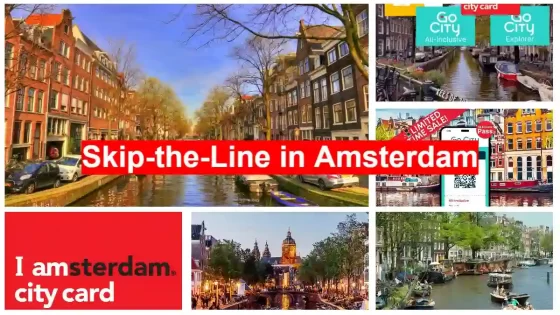
Is Amsterdam City Card Worth It for Tourists?
In 2026, the I Amsterdam City Card remains a powerful tool, but its value depends on your pace. The prices for 2026 are: €67 (24h), €94 (48h), €115 (72h), and €140 (120h). It includes free entry to over 70 museums, including the Rijksmuseum, Zaanse Schans, and a canal cruise, plus unlimited use of GVB public transport (trams, buses, metro).
If you plan on doing a “deep dive”—visiting at least two major museums and taking a boat tour in a single day—the card pays for itself. For example, a 72-hour card costs about €38 per day. When you consider that the Rijksmuseum is €25 and a day transport pass is €10, you only need one more small attraction to be in the “profit” zone. However, if you prefer just wandering the streets and only want to see one museum during your entire trip, you are better off paying as you go with OV-pay.
How to Skip Lines in Amsterdam Attractions
The only way to “skip the line” in 2026 is to book a time slot. Even with a city pass, you often need to reserve your entry time online in advance for the most popular spots like the Van Gogh Museum or the Anne Frank House. My best Amsterdam travel hacks for 2026: if the morning slots are full, look for “Art after Dark.” Many museums, including the Van Gogh, stay open until 9:00 PM on Friday evenings, and the crowds are significantly thinner.
For the Rijksmuseum, try entering through the side entrances if you have a digital ticket, and always aim for the 9:00 AM slot. For the Anne Frank House, remember that tickets are released exactly six weeks in advance on Tuesday mornings. If you missed out, check the official website at 9:00 AM local time daily for a handful of last-minute cancellations—it’s a long shot, but it works more often than you’d think!
Safety Tips for Tourists Visiting Amsterdam
Amsterdam is incredibly safe, but like any major hub in Europe, it has its quirks. In 2026, the “substantial” (Level 4) national threat level means you will see a visible police presence in crowded areas like Dam Square—don’t be alarmed; it’s standard procedure. The most common crime is petty theft and pickpocketing, especially on the Amsterdam–Brussels–Paris train routes and in the Red Light District. Keep your phone and wallet in front pockets or zippered bags.
A unique safety tip for the Netherlands: watch the water. Canal edges often don’t have railings. Every year, people (usually after a few too many Heineken) fall into the canals. If you are walking home late at night, stay well away from the edge. Lastly, if someone claiming to be a “plain-clothes police officer” asks to see your wallet or credit card on the street, it is a scam. Real Dutch police will never ask to handle your cash or cards. Politely offer to walk with them to the nearest police station, and they will likely disappear.
Best Day Trips From Amsterdam (Easy Routes & Travel Times)
While the city itself is captivating, the real magic of the Netherlands often lies just a short train ride away. In 2026, the country’s rail network remains one of the best in the world, making it possible to swap the canal ring for windmills, medieval towers, or quiet water villages before lunchtime.
The beauty of these excursions is that you don’t need a car. Every destination listed here is easily reachable from Amsterdam Centraal, and you can simply tap in and out with your contactless card using the OV-pay system.
Zaanse Schans Day Trip From Amsterdam Guide
If you want to step into a 17th-century painting, Zaanse Schans is your destination. In 2026, the village has introduced a new €17.50 bundled entrance fee (starting spring 2026) which simplifies the experience by covering access to the village, the Zaans Museum, and the interiors of the working windmills. Previously, you had to pay for each mill separately, so this is a great value for Amsterdam travel cost optimization.
Travel Time: A direct NS Train takes only 16 to 18 minutes to reach Zaandijk Zaanse Schans station. From there, it is a scenic 10-minute walk across the bridge.
The Experience: You can see traditional oil, paint, and sawmills in action. Don’t miss the clog-making demonstration—it’s free and surprisingly fascinating to see a piece of wood turned into footwear in under five minutes.
Local Tip: Arrive before 10:00 AM. By midday, the tour buses from the Centrum arrive, and the narrow bridges can get quite crowded.
Giethoorn Day Trip From Amsterdam (Is It Worth It?)
Often called the “Venice of the North,” Giethoorn is a village where roads are replaced by canals. In 2026, it remains a bucket-list item, but it requires a bit more effort to reach.
Travel Time: By public transport, it takes about 2 to 2.5 hours each way. You take a train to Steenwijk and then hop on Bus 70.
Is It Worth It? If you love photography and slow-paced boat rides, yes. However, in 2026, it can get very busy with “bumper boat” traffic in the narrow canals during peak spring and summer weekends.
Strategy: For many, booking a guided coach tour is smarter here as it handles the complex logistics and often includes a private boat tour, saving you from the 5-hour round-trip commute on public buses.
Volendam and Marken Travel Route Explained
For a taste of the Netherlands‘ fishing heritage, the duo of Volendam and Marken is unbeatable. These two towns offer a sharp contrast: Volendam is lively and colorful, while Marken is quiet, green, and feels frozen in time.
Route: Take a MeerPlus Bus (like the 316) from the IJ-side of Amsterdam Centraal. It takes about 25 minutes to reach Volendam. From there, take the Volendam-Marken Express ferry (30 minutes) to reach the island of Marken.
What to Do: In Volendam, try the smoked eel and take a photo in traditional Dutch costume. In Marken, walk through the “werven” (houses built on mounds) to see the iconic wooden architecture. You can then take a bus from Marken directly back to Amsterdam, completing a perfect loop.
Haarlem vs Utrecht Day Trip Comparison
If you only have time for one “city” day trip, the choice usually comes down to these two. Both are stunning, but they offer very different vibes.
| Feature | Haarlem | Utrecht |
| Travel Time | 15 Minutes | 25-30 Minutes |
| Vibe | Relaxed, “Mini-Amsterdam,” Historic | Vibrant, University City, Energetic |
| Key Landmark | St. Bavo’s Cathedral & Grote Markt | Dom Tower & the two-tier canals |
| Best For | Boutique shopping and proximity to the beach | Dining by the water and medieval hidden alleys |
Haarlem is incredibly easy to visit—it’s essentially a quieter, more sophisticated version of the capital. It’s also the gateway to the National Park Zuid-Kennemerland and the beaches of Zandvoort.
Utrecht, on the other hand, is famous for its unique “wharf cellars”—canal-side terraces where you can eat and drink right at water level, which is something you won’t even find in Amsterdam. If you want a more “local” and less “touristy” feel, Utrecht is often the winner.
Amsterdam Packing Guide Based on Season and Travel Style
Packing for the Netherlands is an exercise in preparation for “four seasons in one day.” Even in 2026, the North Sea climate remains famously unpredictable. Today, as of May 6, 2026, the city is seeing mild spring weather with highs around 17°C to 18°C and evenings cooling down to 10°C. If you were standing on the Prinsengracht right now, you’d see locals in light layers, ready to peel them off as soon as the sun hits a cafe terrace.
The golden rule for Amsterdam is: Function over fashion, but make it polished. The Dutch style is “smart-casual”—think sleek sneakers, well-fitted jeans, and a high-quality jacket.
What to Pack for Amsterdam in Spring and Summer
Spring (March–May) and Summer (June–August) are all about versatility. For a spring trip like right now, layers are non-negotiable. You’ll want a base layer of cotton T-shirts, topped with a sweater or cardigan, and a light, water-resistant trench or “puffy” jacket. Because the Tulip Festival 2026 involves a lot of walking through gardens, your footwear must be broken-in and ideally moisture-wicking.
In the summer, temperatures hover around 20°C to 25°C, but the breeze off the canals can feel chilly after sunset. Pack breathable fabrics like linen or light cotton, but always keep a light hoodie or denim jacket in your daypack. While you’ll see plenty of sandals, I recommend closed-toe walking sneakers for the city—Amsterdam’s cobblestones and tram tracks are notoriously unforgiving to flip-flops.
What to Wear in Amsterdam in Winter and Autumn
When the leaves fall in October or the frost hits in January, your focus shifts to staying dry and wind-blocked. Autumn in the Netherlands is the wettest season, so a 100% waterproof raincoat with a hood is a better investment than a simple umbrella, which the Dutch winds will likely turn inside out.
For winter, where temperatures average 2°C to 6°C, thermal base layers are your best friend. They allow you to look stylish in a wool coat without shivering. Pack a warm scarf, leather gloves, and a beanie—essentials for those long winter walks through the Amsterdam Light Festival. Footwear should be waterproof leather boots with a solid rubber grip to handle slippery, wet bricks.
Essentials You Should Not Forget in Amsterdam
Regardless of when you visit in 2026, these items should be at the top of your list:
Universal Travel Adapter: The Netherlands uses Type C and F plugs (two round pins).
Portable Power Bank: Between Google Maps, OV-pay tapping, and endless photos of canal houses, your phone battery will drain faster than usual.
Crossbody Bag: An anti-theft bag is a smart Amsterdam travel hacks move for crowded trams and the Red Light District.
Reusable Water Bottle: Dutch tap water is among the highest quality in the world—don’t waste money on bottled water!
Small Amount of Euro Coins: While the city is nearly 100% cashless, you’ll occasionally need a €0.50 or €1 coin for public restrooms.
Amsterdam Travel Blueprint Summary (Your Smart Plan in One Page)
You are now equipped with the ultimate Amsterdam travel guide for 2026. From navigating the 12.5% tourist tax to finding the perfect “hidden” church in an attic, the goal of this blueprint is to ensure you spend your time experiencing the city, not just managing it. Amsterdam is a city that rewards the curious and the prepared.
Quick Amsterdam Travel Checklist
[ ] Booked Van Gogh and Anne Frank House.
[ ] Set up OV-pay on your phone or contactless card.
[ ] Downloaded an offline map of the Canal Ring.
[ ] Packed a waterproof jacket (no matter the forecast).
[ ] Reserved your first-night dinner in the Jordaan or De Pijp.
Final Tips for Planning a Perfect Amsterdam Trip
The best advice I can leave you with is to look up. The most beautiful details of Amsterdam—the ornate gables, the “hoisting hooks” at the top of houses, and the way the light hits the brickwork—are all above eye level. Don’t be afraid to get a little bit lost; the city’s concentric circles mean that if you keep walking, you’ll eventually find your way back to the center. Respect the bike lanes, eat the herring, and enjoy the unique “gezellig” spirit of the Netherlands.